




Digital Marketing Explained: The Complete Guide for Businesses in 2026
Ask ten business owners what “digital marketing” means, and you’ll probably get ten different answers. Some think of it as running Facebook ads. Others think of it as having a nice website. Some think it’s mostly about showing up on Google. The truth is, digital marketing isn’t any one of these things — it’s all of them, working together.
At its core, digital marketing is simply the practice of promoting a business, product, or service using the internet — through the channels where your customers already spend their time. Done well, it’s not a single tactic, it’s a system: attracting the right people, earning their trust, and guiding them toward becoming a customer. Done poorly, it’s a pile of disconnected efforts that never quite add up to real growth.
This guide walks through every major piece of that system, in plain language — including how search itself has changed in the age of AI.
1. Search Engine Optimization (SEO): Getting Found Organically
SEO is usually the first thing people associate with digital marketing, and for good reason — it’s how your business shows up when someone searches for exactly what you offer, without you having to pay for that visibility every time someone clicks.
SEO works on a few levels:
- Technical SEO — making sure your website is fast, secure, mobile-friendly, and easy for search engines to crawl and understand.
- On-page SEO — writing content, titles, and headings that clearly match what people are actually searching for.
- Off-page SEO — earning backlinks and mentions from other credible websites, which signals trust to search engines.
- Local SEO — optimizing your Google Business Profile and local listings so nearby customers find you when searching “near me.”
SEO is a long game. It rarely produces overnight results, but unlike paid ads, the traffic it earns keeps working long after the content is published.
2. Content Marketing: Earning Attention Instead of Buying It
Content marketing is the practice of creating genuinely useful material — blog posts, guides, videos, case studies — that attracts your ideal customer by answering their real questions, rather than interrupting them with an ad.
Good content marketing does two jobs at once: it builds trust with real people, and it gives search engines (and increasingly, AI tools) something worth ranking and citing. A business that consistently publishes helpful, well-written content builds authority in its industry over time — something that’s very difficult for competitors to copy quickly, even with a bigger ad budget.
3. Social Media Marketing: Building Relationships at Scale
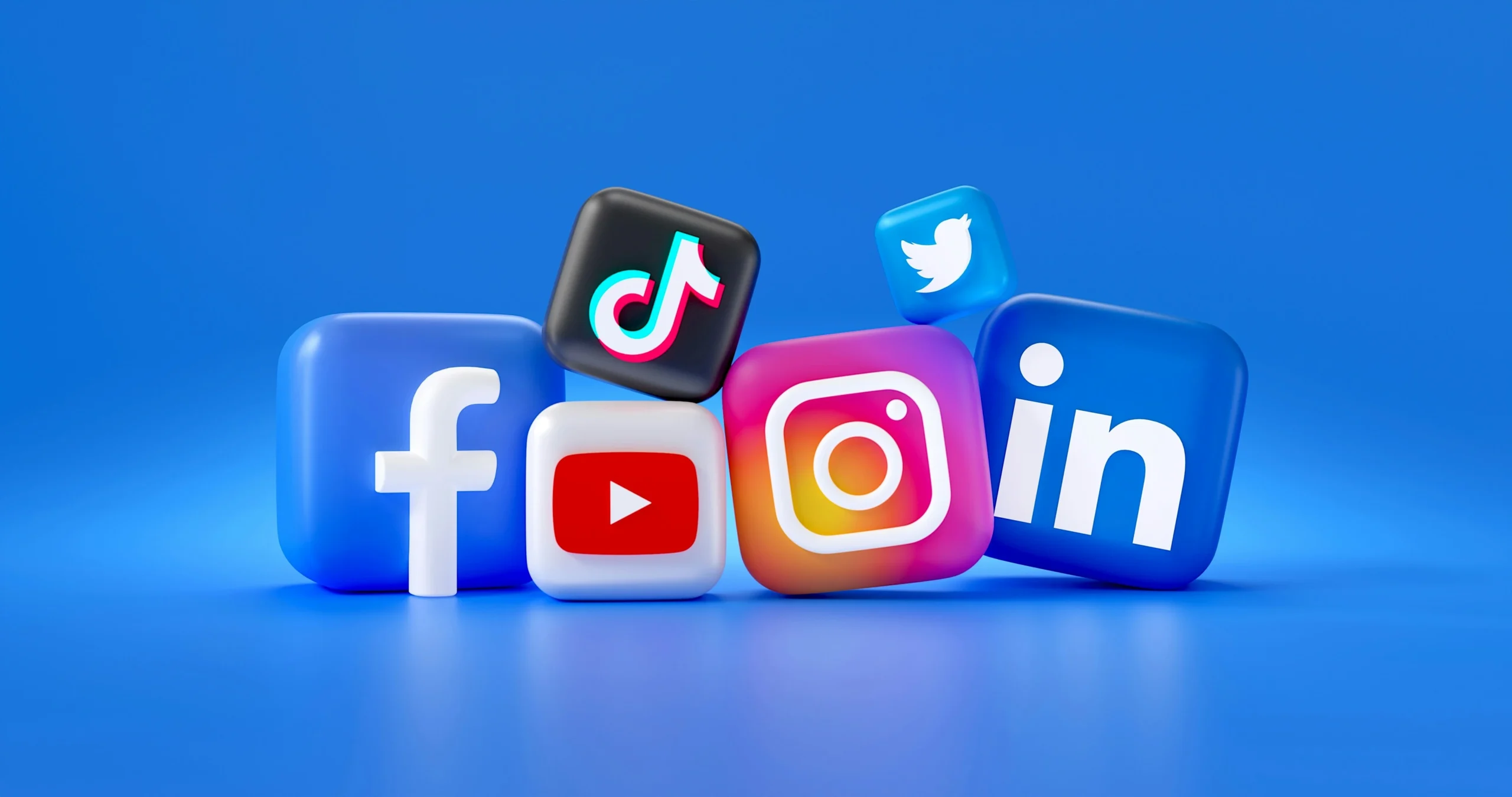
Social platforms — Instagram, Facebook, LinkedIn, TikTok, YouTube — aren’t just about posting updates anymore. They’re where a huge share of buying decisions actually start, whether that’s someone discovering a brand through a short video or checking a business’s reviews and activity before deciding to trust them.
Effective social media marketing usually combines:
- Organic content that builds brand personality and trust over time
- Paid social ads that target specific audiences with precision
- Community engagement — actually responding to comments and messages, not just broadcasting
The channels that matter depend heavily on the business. A B2B consulting firm and a local restaurant should absolutely not be running the same social strategy.
4. Pay-Per-Click (PPC) and Paid Advertising: Buying Speed
Where SEO and content marketing build momentum over months, paid advertising — Google Ads, Meta Ads, LinkedIn Ads — delivers visibility immediately. You’re literally paying for placement in front of the exact audience you want, whenever you want it.
The tradeoff is straightforward: paid traffic stops the moment you stop paying, while organic traffic from SEO and content keeps generating leads long-term. The businesses that grow fastest typically use paid ads to generate results now, while SEO and content build a foundation that reduces dependency on ad spend over time.
5. Email Marketing: The Channel You Actually Own
Social media algorithms change. Search rankings shift. But an email list is an asset a business fully owns — no platform can suddenly decide to show your message to fewer people.
Email marketing remains one of the highest-return digital marketing channels because it reaches people who’ve already shown interest, at a fraction of the cost of paid advertising. Automated sequences — welcome emails, nurture sequences, post-purchase follow-ups — do this work continuously in the background, without requiring someone on your team to send each message manually.
6. CRM Automation and Sales Funnels: Converting Interest Into Revenue
None of the channels above matter much if the leads they generate never get followed up with. This is where CRM (Customer Relationship Management) automation and sales funnels come in — the systems that take a raw lead and guide them, step by step, toward becoming a paying customer.
A well-built funnel typically includes a focused landing page, an instant automated response the moment someone submits their information, and a structured follow-up sequence over the following days. CRM automation makes sure this happens consistently, every time, regardless of how busy a sales team is — which matters enormously, since leads that go unanswered for even a few hours convert at a fraction of the rate of leads contacted immediately.
7. The New Layer: How AI Has Changed Search Itself
Everything above still matters — but the way people search has genuinely shifted, and digital marketing in 2026 has to account for it. A growing number of people now get their answers directly from AI tools like ChatGPT, Gemini, and Google’s AI Overviews, instead of clicking through a list of websites. This has created a few new, closely related disciplines that sit on top of traditional SEO:
- GEO (Generative Engine Optimization) — structuring content so AI tools cite and reference it when generating answers, not just so it ranks on a results page.
- AEO (Answer Engine Optimization) — writing content that directly answers real questions, so it gets pulled into featured snippets, answer boxes, and voice responses.
- AIO (AI Optimization) — making sure a website’s content and underlying data are clean and structured enough for AI systems to actually understand and trust.
- SXO (Search Experience Optimization) — making sure that once someone actually lands on your site — through any of the above — the experience is fast, clear, and easy enough to convert them into a customer.
None of these replace SEO. They build on it. AI tools still pull their answers from crawlable, trustworthy, well-structured websites — so a business with weak SEO fundamentals has little chance of showing up in an AI-generated answer either. Think of it less as five separate strategies and more as one strategy with five checkpoints: get found, get cited, get understood by AI, get chosen in the answer, and get converted once someone arrives.
How All the Pieces Fit Together
Here’s the part that trips a lot of businesses up: each of these channels works better in combination than alone.
- SEO and content marketing bring in organic traffic over time.
- Paid ads bring in immediate traffic while that organic engine builds.
- Social media builds trust and stays in front of people who aren’t ready to buy yet.
- Email marketing keeps that relationship alive without ongoing ad spend.
- CRM automation and sales funnels make sure none of that traffic goes to waste.
- GEO, AEO, and AIO make sure your business shows up in the growing share of searches that now happen through AI.
- SXO makes sure that whichever channel brought someone in, the actual experience on your site earns their business.
A business investing heavily in one channel while ignoring the rest usually plateaus — great content with no follow-up system leaves leads cold; great ads with a slow, confusing website waste ad spend; strong SEO with no CRM automation means leads sit unanswered. Real growth comes from treating digital marketing as one connected system, not a collection of separate projects.
Where Should a Business Start?
If you’re building a digital marketing strategy from scratch, a realistic order looks like this:
- Fix the foundation — a fast, clear, trustworthy website (this supports everything else, including SXO).
- Build core SEO — technical health, quality content, and local optimization if you serve a specific area.
- Add a lead capture and follow-up system — landing pages and CRM automation, so no lead is wasted.
- Layer in paid ads — to generate momentum while organic channels build.
- Grow social media and email — to build long-term relationships and repeat business.
- Structure content for AI search — GEO and AEO practices, once the fundamentals are solid.
FAQ
What’s the difference between SEO and digital marketing? SEO is one channel within digital marketing, focused specifically on organic search visibility. Digital marketing is the broader umbrella that includes SEO alongside content marketing, social media, paid advertising, email marketing, and CRM automation.
Do small businesses need all of these channels? Not all at once. Most small businesses see the best return by getting SEO and a lead follow-up system solid first, then adding paid ads and social media as budget allows.
Is digital marketing still worth it with AI search growing? Yes — arguably more than ever. AI-powered search still pulls its answers from well-optimized, trustworthy websites, so strong digital marketing fundamentals now support visibility across both traditional search and AI-generated answers.
Ready to Build a Digital Marketing Strategy That Actually Works Together?
S Ranker builds complete digital marketing systems — SEO, content, lead generation, CRM automation, and AI search visibility — designed to work as one strategy, not a pile of disconnected tactics.